Sunday, 28 September 2014

Addiction & Its Chemistry
We received a call to our child helpline on last Thursday from a teacher of a school. She said that some of her students were using drugs and pressuring others to take drugs.   Our team met the school principal and fixed an awareness class on drug abuse. Our Success For Success (S4S) team in an effort to empower children from different problems that face them; has been conducting training for different stake holders as well as school children. It is an alarming revelation that School children across Kerala are more and more exposed to substance abuse and there is easy availability of the same.

“I was a good student looking forward to the future. I liked my friends and started hanging out with them… It all changed suddenly and I started using drugs.  Now my life and my future have been compromised.  I need help” This is one of the comments we received during the S4S training class conducted in the school.  Some students who were using drugs came to meet us personally. Most of them who used drugs got into it through peer pressure as well as lack of understanding about the consequences. We provided counseling and involved the parents and school authorities to provide expert help for children. We formed a task force involving children and responsible teachers to trace how children receive drugs and pass information so that we could initiate action against those responsible for destroying the lives of children.

Why are teenagers more prone to substance abuse?
The New York University School of Medicine has spent years studying the way drugs act on the brain. Among their findings is the fact that drugs begin to change a user’s brain the very first time a drug is tried, with the drug-induced release of a key brain neurotransmitter called dopamine. At first, dopamine causes an intensely pleasurable feeling, but as time—and drug use—progresses, the brain begins to rely upon this release of dopamine without any of the pleasurable side effects. With time, drugs actually alter the way the brain uses dopamine. When a person becomes addicted, it means that his brain has been changed to the point that he needs the drug just to maintain a minimal or “normal” level of functioning.  

All this has a special significance for teenagers. New studies have also discovered that teens are more vulnerable to addiction than adults. The teenage brain is a wonderful thing, changing and developing in response to experiences and environment. Because the teen brain is still building itself, it is easy for a young person to learn new things quickly. But that ability to be molded by outside influences also carries a serious risk when a teen experiments with drugs because such use can cause permanent damage. On top of that, research has shown that a teen’s frontal lobes, the area of the brain responsible for decision-making and planning, is still immature—making teens less likely to consider the consequences of their actions and thus more likely to take dangerous risks like using drugs.

When teens were surveyed to find out why they started using drugs in the first place most of them replied that it was due to pressure from their friends. They wanted to be cool and popular.  As the dealers know it they will approach teens as a friend and offer to “help you out” with “something to bring you up.” The drug will “help you fit in” or “make you cool.” Dealers will say anything to get the teens to buy it because they are motivated by the profit they make.

Overcome Craving
It is not so easy to say “NO” to drugs. Friend may expect you to say “YES” to it. When a person first takes drugs, it is voluntary decision. But there is a point when the person’s decision to take drugs may no longer be voluntary. It is as if a “switch” goes off in the user’s brain, and the person becomes addicted. Once a person becomes addicted, his or her top priority in life becomes obtaining drugs, taking drugs, getting high, and then getting more drugs. Everything else – family, friends, study, job, the future – loses importance.

But there are also many protective or resilience factors, such as good adult role models, supportive friends, and achievement in school, which can reduce the chance of someone becoming a drug abuser. Strengthening protective factors can help you and your friends avoid drug use altogether, even if there are still many risk factors in your lives.

Once you decide to make a big change in your life, it is hard to figure out where to start. Here are some ideas to get rid of:
1.       You could stop seeing or mingling with the drug users which may tempt you to do it again.
2.    Concentrate more on your studies.
3.    Talk to people you trust about difficult situations. Tell people who can and will help you quit drinking and using drugs, let them know what they can do to help.
4.    Google ‘natural dopamine boosters’ and follow instructions.

Always remember, we have only one life. Instead being addicted to drugs we must let ourselves be addicted to life!


Saturday, 23 August 2014

Nipped in the Bud


Nipped in the Bud

Krishna Kumar (name changed) is a plus-two student from Thiruvananthapuram. He belongs to a financially stable family and he is their only child. His father provided everything the child required.  It was a happy family.  Krishnakumar was aloof often and was afraid of facing people and also often liked to be alone behind closed door. The parents thought that it was part of the character of the boy which was unlike any youth of his age. He did not have many friends too.

When Krishna was studying in Vth grade; his uncle had tried to sexually abuse the child. This was noticed by his aunty and due care was taken to solve the issue. Little did Krishna’s parents know about the continuance of abuse by Krishna’s uncle.

Previous week Krishna’s mother heard noises from the room of Krishna at 11.00pm and went to his room. After her son opened the door she found Madhu (Krishna’s uncle) hiding in a cupboard. He had climbed over the terrace of the building and Krishna had opened the door for him. The child had been abused by Madhu for the past several years.

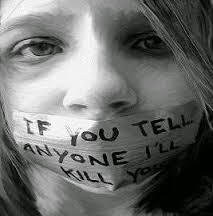
By the first few instances of abuse, the abuser had managed to create guilt feelings in the child and had threatened him saying that it was his fault and had total control over the child so that it was impossible to escape from his clutches or to tell anybody. It was surprising that even at 17 years of age Krishna could speak out or defend himself.

It took hours of counseling to make Krishna realize that it was not his fault. Probably it will take years to bring him back to normalcy. After legal proceeding was initiated it was found that Madhu had abused several children of his relatives and even his son.

It is surprising that the parents did not realize the plight of the child even when they had only one child to take care. It is very important to talk with the children, befriend them and get to know the minute changes in their behavior in order to intervene to help the child. Home should be the first school for the child in knowledge on every aspect of life.  It is important to remember that child abuse cast a shadow the length of a life time.


Thursday, 7 August 2014


A Holistic Approach

Rescue, Protection and rehabilitation of children at risk and promoting child rights are fundamental to Don Bosco Veedu Society’s work for children.  Involvement for promoting and restoring child rights cannot be devoid of a child’s family. As family is where a child should belong, we often find that in order to provide a conducive atmosphere for holistic growth of children, there is an unavoidable need to create a support system involving the ‘child friendly’ family members as violations faced by children most often are from the family members themselves.

A call came to our child helpline regarding a boy who was not attending school regularly.  Our team visited the home of the child. The family consisted of the mother and her child Kishore (given name). We found that the mother was not sending the child to school. She was not mentally sound and she said that bad weather is causing illness to the child though we noted that there were no weather problems.   She promised to send Kishore to school from the next day.

We made a follow up visit after two weeks and found that she was not sending the child to school. We visited her relatives and local Panchayat authorities. Her brother was ready to take care of the child but due to her mental health problems, she was not ready to listen to her brother.

Enquiring further we found that Smitha (mother of Kishore - given name) was a Civil Engineering diploma holder married to a drunkard. She had lost two children during the delivery. And Kishore is the third child of Smitha. Soon after the birth of Kishore his father dumped the family and went away. By this time Smitha was mentally ill and Kishore became her only support. After an attack of pneumonia, Smitha  would not let the child go out due to fear of illness recurring.
We intervened with the local authorities, police and relations of the family to rescue the child and hospitalize the mother.  After a course of treatment Smitha is under the care of her brother and the child is attending school regularly.

Our experience is that in over 90 percent of the cases there is a need to involve the relatives, neigbourhood and local authorities in order to create a support system to the child so that there is possibility for long standing solutions to issues faced by children. This is the style of intervention that we do even though it is much more tedious. 


Sunday, 27 July 2014

A new Challenge

A New Challenge

National Drug Dependence Treatment Centre and the All India Institute of Medical Sciences conducted a recent multi State survey on Substance Abuse and Drug Addiction among Children. The results were shocking.  Kerala topped the list -74 per cent of school children in Kerala use tobacco! A total of 119 children in the state, between the age group of 5-18, were covered as part of the study, conducted to examine the pattern, profile and correlates of substance use.

In all, the study commissioned by Working Group on Substance Abuse and Drug Addiction among Children under the National Commission for Protection of Child Rights (NCPCR) reached out to 4,024 children across 27 states and two union territories. 

 Alcohol, tobacco and inhalants are common initial substances which are easily available to the children. A. Shajahan, Secretary, Department of General Education said, “All educational institutions in the state have to take a note of this and strictly enforce laws of the land along with spreading awareness. Concerted action is the need of the hour; nothing should be left to chance.”

Here is one of our experiences. One day a call came to our child help line and the informer was a school teacher from rural Trivandrum. He said that there were a few students who regularly used addictives like pan masala in their school. But they would not disclose the details from where they obtained it, he added. He requested our team to come and speak to them. Our S4S team visited the school on Tuesday 22 July, 2014.

When the students met the team they did not hide their irritation towards awareness classes by saying “we have attended many classes.” Our team leader smiled and said politely “We are not here to conduct an awareness class, but I want to show you some people who have been using pan masala and other tobacco products.”  Then he showed pictures and videos of people  who suffer from mouth cancer due to addictive drug abuse. One of the drug users exclaimed at the end of the class: ‘I will never again use tobacco in my life’.


During the interactive session, some of the students gave the full details of the drug sellers. Together with the School authorities we formed  “an Anti-drug Squad”. The School Principal was happy to take immediate action; more surprising was that the drug abusers were ready to lead the squad.


Sunday, 20 July 2014

Another Milestone

Another Milestone

Though Trivandrum Don Bosco Veedu Society’s primary focus is on the children at risk of Trivandrum city and its premises, our ultimate aim is to create a child friendly atmosphere in the wider Society of Kerala.  We had conducted a survey on street involved children in and around Trivandrum city in order to find the number of children on the streets, assess their primary needs in order to influence policy decisions in taking care of them. The funds for conducting the survey was provided by the Social Justice Department, Govt of Kerala. Others involved were Don Bosco National forum for Young at Risk (YaR) and Don Bosco Research Centre, Mumbai.

The rapid assessment survey of street involved children was conducted in 100 wards of Trivandrum Corporation. We found that:
  •   The total number of children found on street was limited to 140.
  •  The study shows that majority of the children were with families and not orphaned or abandoned - 44% children were staying with parents, 20% with relatives and 13% with single mothers.
  • There were almost zero cases under run away or abandoned among the children found on streets.

The findings were very positive and it mirrored the effectiveness of our interventions on behalf of street children for over past 22 years. The survey conducted by us in 1994 showed the presence of over 2000 children on the streets. Child begging cases have dipped drastically to almost zero percentage. This phenomenal statics has been achieved through years of sensitization process. We can say that we have contained the problem of street children in Trivandrum.

Presently any child who reaches the city is taken in by us. The general public are sensitive and over 90 percent reporting to our helpline facilitates us to rescue children immediately and provide them shelter in our shelter home. The child rescue booth at the railway station brings in an average of over 200 children who reach to the city through trains.

The Social Justice Department, Government of Kerala, asked us for a presentation of the results of the survey and our major suggestion to provide for railway rescue booths and shelter homes in big cities of Kerala has been accepted by the Government. Three major stations (Ernakulum, Kozhikode, and Palakkad) have been selected for the same.

We are contended that care and protection to more children on the streets across Kerala have been effected through our intervention.

Rapid Assessment Survey of Street Children


Monday, 14 July 2014

Trafficked and Rescued!

Trafficked Child Rescued from Railway Station

Women and Child Help Center, the outreach center of Don Bosco Nivas Shelter Home at Trivandrum Central Railway Station rescued a trafficked child found on the railway platform on July 10, 2014. Our outreach staff Mrs. Amala found a 3 year old child begging on the platform. The child led our staff to her mother.  The baby was wearing shabby clothes and seemed not to have eaten for long. Mrs. Amala brought the child and the lady to Don Bosco Nivas.  From the interaction with the lady (Chettiamma) we were unable to ascertain whether the child was hers. As trafficking for begging was a possibility we asked her to produce documents and provided shelter for the child at Child Welfare Council. She gave the name of the child as Puteli.

Today (14 July, 2014) Police from Thiruvalla came to our office to enquire about the child.  They told that on January 2014 Mr. Siva filed a missing complaint of his daughter Vaigeswary. Vaigeswary is the second child of Siva and Rajeswary. Siva native of Andhra Pradesh has been living at Thiruvalla for the past few years and working as a cobbler. Chettiamma and her husband Raju had casual conversation with the family on the day the child was found missing. The police traced Raju in Andhra Pradesh and apprehended him and his wife. The police have registered case against the couple for child trafficking. 

This incident shows that there are children being trafficked and used for begging and many other abusive purposes. The rescue booth at the railway station has proved vital in saving Vaigeswary who would otherwise have been subject to cruelty and denied childhood and would have lost her family forever.  The rescue booth at the railway station rescues an average of 250 children every year and they are linked back to the safety of their homes. Many a missing children have been restored to their families


Saturday, 12 July 2014

Awareness for prevention

An Unforgettable Experience
A call came to CHILDLINE from Sreejith, aged 12, saying that he was being physically abused by family at Kottoor near Nedumangad. When our team reached the place, Sreejith was the only one present. He had a swollen hand which was bandaged. Sreejith greeted our team happily. When our team enquired how Sreejith came to know of CHILDLINE, he exclaimed: “All our classrooms have beautiful posters of CHILDLINE and I am seeing it every day. I called CHILDLINE because of that”. We intervened with the family for the safety and protection of the child.

The above experience was an unforgettable one our team. Our efforts are seemingly bearing fruit. The poster campaign to all the schools in Kerala with help of the Social Justice Department has just been finished and almost all schools have put up the posters in every classroom. As the children are always seeing the posters with clear message to contact CHILDLINE when they are in distress, this incident shows that the message has gone across to children. There is a sharp increase in the number of issues being reported by children.

Don Bosco Veedu Society’s intervention to spread the message of child safety to over 12700 schools across Kerala is indeed benefitting over 38 lakhs of school going children across the state. Over the past few weeks there have been increased reporting of issues to CHILDLINE from children and this is a positive sign of child rights awareness among children. The safety of all children of our society is our aim.